Best Earrings for Your Face Shape: Quick Style Guide
Finding Earrings That Flatter: It’s Mostly About Balance
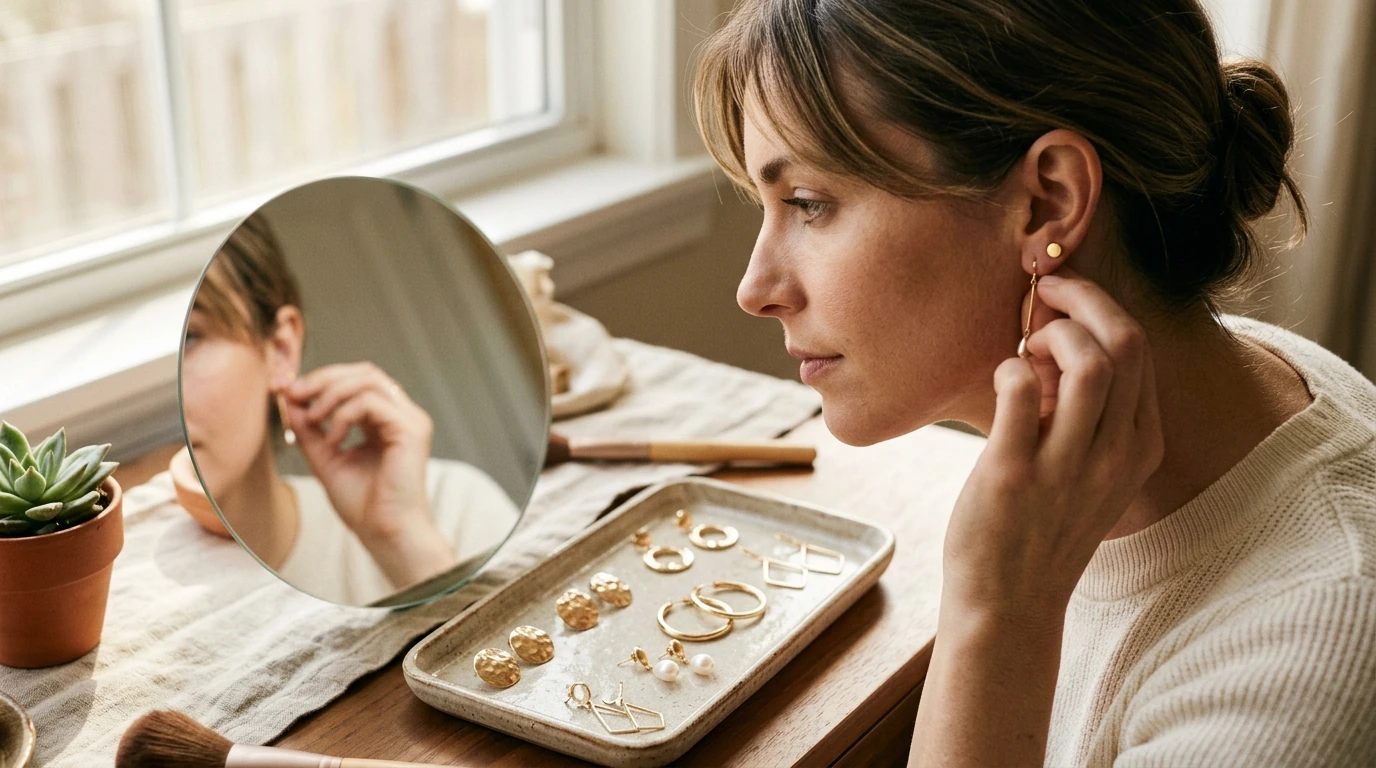
Choosing earrings that look “right” isn’t about chasing trends—it’s about creating balance. Earrings act like a frame: they can visually add length, add width, soften angles, or introduce structure. Once you know what your face naturally emphasizes (cheek fullness, a strong jaw, a longer silhouette), picking the best shapes gets much easier—whether you’re building a small capsule collection or shopping for one outfit-specific pair. For more guidance, see How to Choose the Best Earrings For Your Face Shape – Blue Nile.
Start With Your Face Shape (Quick Identification)
Pull your hair back, look straight into a mirror, and focus on proportions instead of tiny details. First, note the widest area: forehead, cheekbones, or jaw. Then compare forehead width, cheekbone width, and jaw width, and check two finishing cues: jawline angle (soft vs. sharp) and face length (short/average/long). For further reading, see Types of Earrings: How to Choose Based on Face Shape | Nomination.
If your features feel “in-between,” use the closest match and follow a simple balance rule: add width where the face is narrow, add length where the face is short, and soften sharp angles with curves.
| Face shape | Common cues | Most flattering direction | Usually avoid (if it exaggerates features) |
|---|---|---|---|
| Oval | Balanced proportions, slightly longer than wide | Most styles work; choose based on occasion and neckline | Extremely long, ultra-thin drops if the face already reads very long |
| Round | Full cheeks, similar width and length, soft jaw | Vertical lines: drops, dangles, teardrops; medium-to-long length | Large circular hoops or wide clusters that add width |
| Square | Strong jaw, forehead and jaw similar width | Curves: hoops, rounded drops, oval shapes; soft textures | Boxy shapes and sharp angles that echo the jawline |
| Heart | Wider forehead, narrower chin | Bottom-heavy styles: teardrops, chandeliers, triangles (wide at the bottom) | Top-heavy pieces that widen the temples further |
| Diamond | Widest at cheekbones, narrow forehead and jaw | Moderate width with curves; studs/hoops that soften cheekbone prominence | Very wide pieces centered at the cheekbones |
| Long/Rectangular | Noticeably longer than wide, straighter sides | Add width: medium hoops, clustered studs, shorter drops | Extra-long linear drops that elongate further |
| Pear/Triangle | Wider jaw, narrower forehead | Top emphasis: studs, climbers, smaller hoops; light sparkle near the temples | Very wide bottom-heavy chandeliers if they widen the jaw area |
The Balance Rule: Length, Width, and Shape (How Earrings Change Proportions)
Once you understand what each earring silhouette “does,” shopping becomes faster and more consistent.
- Length elongates: Long drops and linear dangles visually stretch the face. They’re especially flattering for round faces, and less ideal for very long faces that already read elongated.
- Width adds fullness: Hoops, clustered studs, and wide chandeliers add horizontal emphasis. This is helpful for long/rectangular faces, and can be unhelpful for round faces that don’t need extra width.
- Curves soften: Rounded silhouettes reduce the look of sharp angles—great for square and diamond face shapes.
- Angles sharpen: Geometric shapes and straight lines add structure. They can look striking on very soft/round faces, but scale matters—too sharp can feel harsh.
- Scale changes the “frame”: Small earrings highlight facial features. Oversized earrings act like a border around the face; match the earring size to hairstyle volume and neckline openness.
These principles reflect a broader visual preference for balance and proportion—ideas closely tied to how people perceive symmetry and harmony (Encyclopaedia Britannica: Symmetry).
Best Earring Styles by Face Shape (Fast Picks)
Oval
Most silhouettes work. For a simple rotation: small huggies or studs for everyday, medium hoops for versatility, and a drop earring for dressier moments. Keep length proportional to your outfit and hair volume.
Round
Square
Heart
Diamond
Long/Rectangular
Pear/Triangle
Hair, Necklines, and Occasion: Make the Pair Look Intentional
Smart Jewelry Shopping: Fit, Comfort, and Materials
A Shortcut Option: Face-Shape Earring Styling eBook
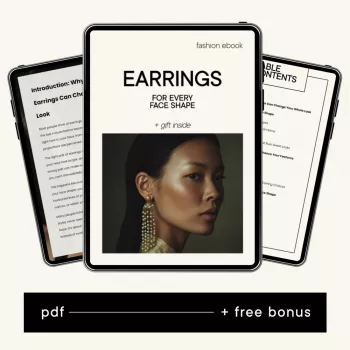
If you want a streamlined, printable reference, Earrings for Every Face Shape – Style Guide eBook organizes face-shape guidance into quick decisions: what to choose, what to skip, and how to style pairs across common occasions.
It’s especially helpful when shopping online—comparing silhouettes and lengths to your face-shape direction can reduce returns and impulse buys. To take the same “capsule” approach beyond jewelry, Joy-Centered Decluttering Kit: The Best Way to Declutter with KonMari (3 in 1 Bundle) can help streamline accessories so the pieces you love are easier to reach and wear.
FAQ
What earrings look best on a round face?
Go for vertical, elongating styles like drops, dangles, threaders, and teardrops, ideally landing below the jaw. Keep the width moderate, and avoid very wide circular hoops if they add extra horizontal fullness.
How do I figure out my face shape for choosing earrings?
Pull your hair back and compare the widths of your forehead, cheekbones, and jaw, then note your jawline angle and overall face length. If your features feel mixed, pick the closest match and use the balance rule (add length, add width, or soften angles) rather than forcing a perfect category.
Are hoops good for a square face?
Yes—rounded hoops and curved shapes help soften the look of strong jaw angles. Medium sizes and organic curves tend to be the most flattering, while very angular geometric pieces can overemphasize sharpness.











Leave a comment