4-Week New Puppy Training Routine: Potty, Crate, Cues
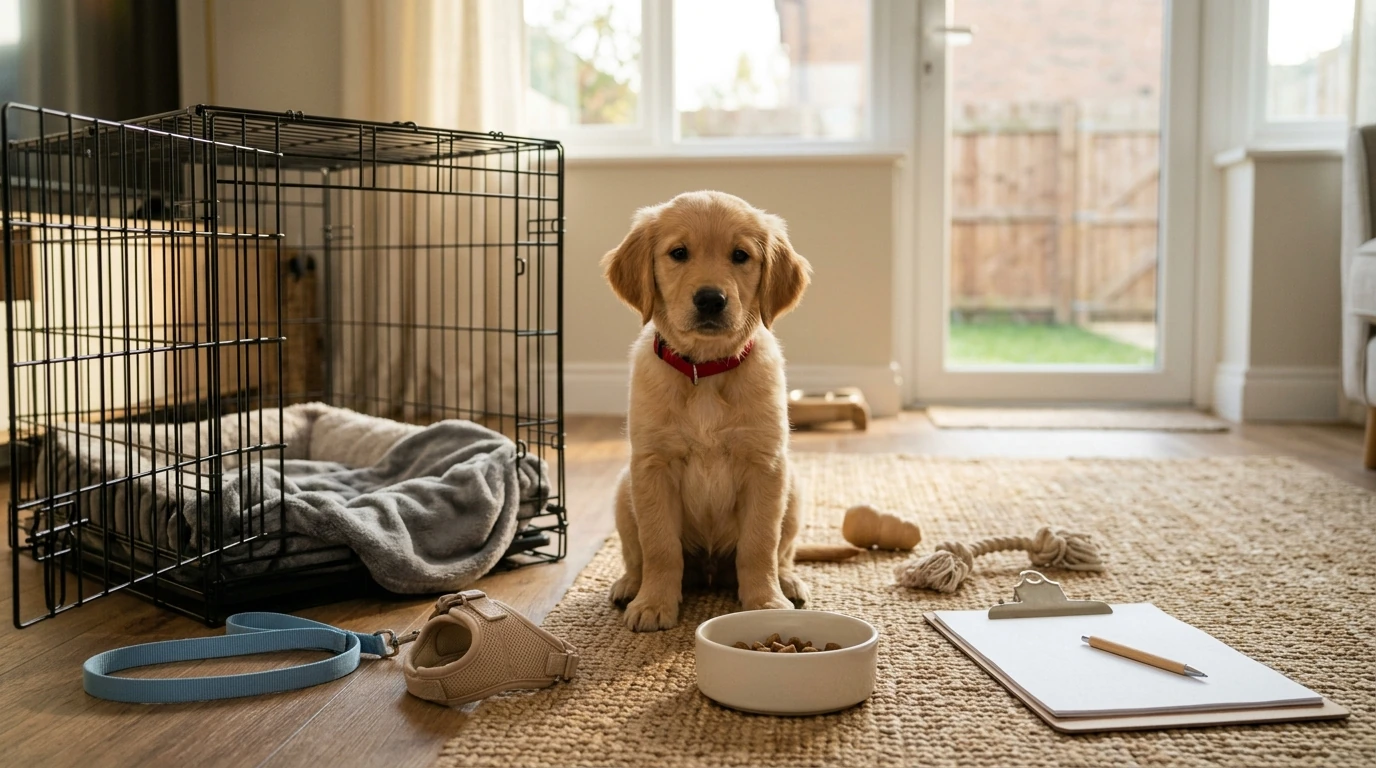
New Puppy Training Starter Guide: A 4-Week Routine for House-Training, Basic Commands, and Socialization
A new puppy learns fastest with short, consistent sessions and a predictable daily rhythm. This starter guide lays out a practical 4-week routine that supports house-training, crate habits, basic cues, calm handling, and safe socialization—plus simple trackers to keep progress clear and stress lower.
Before Day 1: Set Up the Home for Training Success
Training goes smoother when the environment does half the work. Start by choosing a confinement plan—crate, playpen, or one puppy-proofed room—so your puppy isn’t practicing accidents and chewing in every corner of the house. Early on, “more freedom” usually slows progress.
Gather a few essentials: high-value treats that are tiny and easy to swallow, an enzyme cleaner for accidents, a lightweight leash and harness, and a small rotation of chews with different textures. A clicker is optional, but a consistent marker word like “yes” works well.
Create a potty schedule based on age and triggers. Most accidents happen right after waking up, after energetic play, and within minutes after eating—so build those moments into your routine instead of trying to “catch” accidents later. Finally, set 2–3 house rules that everyone follows (furniture access, feeding times, where the puppy sleeps). Consistency matters more than having perfect rules.
The Daily Rhythm: A Simple Puppy Routine That Builds Good Habits
Think in repeating blocks: potty, a short learning moment, a need met (food/play/chew), and then a nap. Puppies that miss naps often become bitey and unfocused, which can look like “bad behavior” when they’re simply overtired.
Keep training sessions short (3–5 minutes), upbeat, and end while your puppy is still succeeding. Track three basics daily: potty accidents, crate/pen time, and one training win (even if it’s small).
Sample Daily Schedule (Adjust to Age and Energy)
| Time Block | What to Do | Goal |
|---|---|---|
| Wake-up | Potty trip immediately | Prevent accidents; reinforce outdoor potty |
| Breakfast | Feed + 3 minutes of training | Build focus; pair food with learning |
| After eating | Potty trip + short walk in a safe area | Strengthen potty pattern; gentle exposure |
| Morning nap | Crate/pen quiet time | Prevent overtired biting; build independence |
| Midday | Potty + play + chew | Meet needs without overstimulation |
| Afternoon nap | Quiet time | Better behavior in the evening |
| Dinner | Feed + easy cues (sit, touch) | Repetition without pressure |
| Evening | Potty + calm play + handling | Manners and body comfort |
| Bedtime | Final potty trip; sleep in crate/pen | Consistent nighttime routine |
Week 1: House-Training and Crate Comfort
Week 1 is about prevention and fast reinforcement. For potty training, reward within 2 seconds of finishing outside. Keep treats by the door so timing stays sharp. Use a simple potty cue (“go potty”) and take your puppy to the same spot at first so the context is crystal clear.
If an accident happens, interrupt gently (a calm “oops”), then carry or lead your puppy outside. Clean with an enzyme cleaner and skip punishment—punishment tends to teach “hide and potty,” not “potty outside.”
For crate comfort, feed meals near the crate or just inside it. Start with the door open, then close it for a few seconds while your puppy is eating or chewing, and open it again before any panic starts. This week is also when chew management pays off: offer a “legal” chew before your puppy starts shopping for cords, shoes, or furniture legs.
Week 2: Foundation Cues and Calm Handling
Week 2 is where basic cues become a language you’ll use all day. Start with name response: say the name once, mark (“yes” or click), then treat. You’re building automatic attention, not testing your puppy.
Teach “sit” and “down” with luring, then fade the lure quickly so your puppy responds to a hand signal and, later, the verbal cue. Add “touch” (nose to your palm) as an easy way to redirect from nipping and as the first brick in your recall foundation.
Week 3: Socialization That Builds Confidence (Not Overwhelm)
After exciting moments, practice a simple “settle”: reward calm on a mat for 3–10 seconds at a time. For more guidance on safe, early socialization, see the American Veterinary Society of Animal Behavior (AVSAB) puppy socialization position statement and the AAHA puppy care guidelines.
Week 4: Reliable Routines, Polite Greetings, and Real-World Practice
Printable Tools That Make Training Easier to Stick With
If you want everything organized in one place, the New Puppy Training Starter Guide (printable 4-week routine) bundles a structured plan with simple trackers you can print and reuse.
To make daily consistency easier, consider pairing your puppy plan with a time-blocking routine like More Time, Less Stress: Time Management Mini-Course. And if you want a simple framework for building skills quickly (for both humans and puppies), Learn to Learn: A Meta-Learning Guide can help you stay consistent with short daily practice.
FAQ
How often should a new puppy go outside for potty breaks?
A helpful rule of thumb is about once per hour when awake for young puppies, plus always after sleep, play, eating, and training. In the early weeks, prevention is the goal—then reward immediately (within 2 seconds) after your puppy finishes outside to lock in the habit.
Is it okay to start training commands before my puppy is fully vaccinated?
Yes—indoor training at home is great to start right away. For outings, follow your veterinarian’s guidance and stick to controlled, low-risk exposure (carrying your puppy, visiting clean areas, and avoiding high-traffic dog spots).
What should be taught first: sit, come, or crate training?
Start with management and calm: crate/pen comfort and a simple “settle” prevent trouble while learning catches up. Next, build name response and recall foundations for safety, then add easy cues like sit and touch as daily building blocks.












Leave a comment