Decode Dog & Cat Temperament for Calmer Training
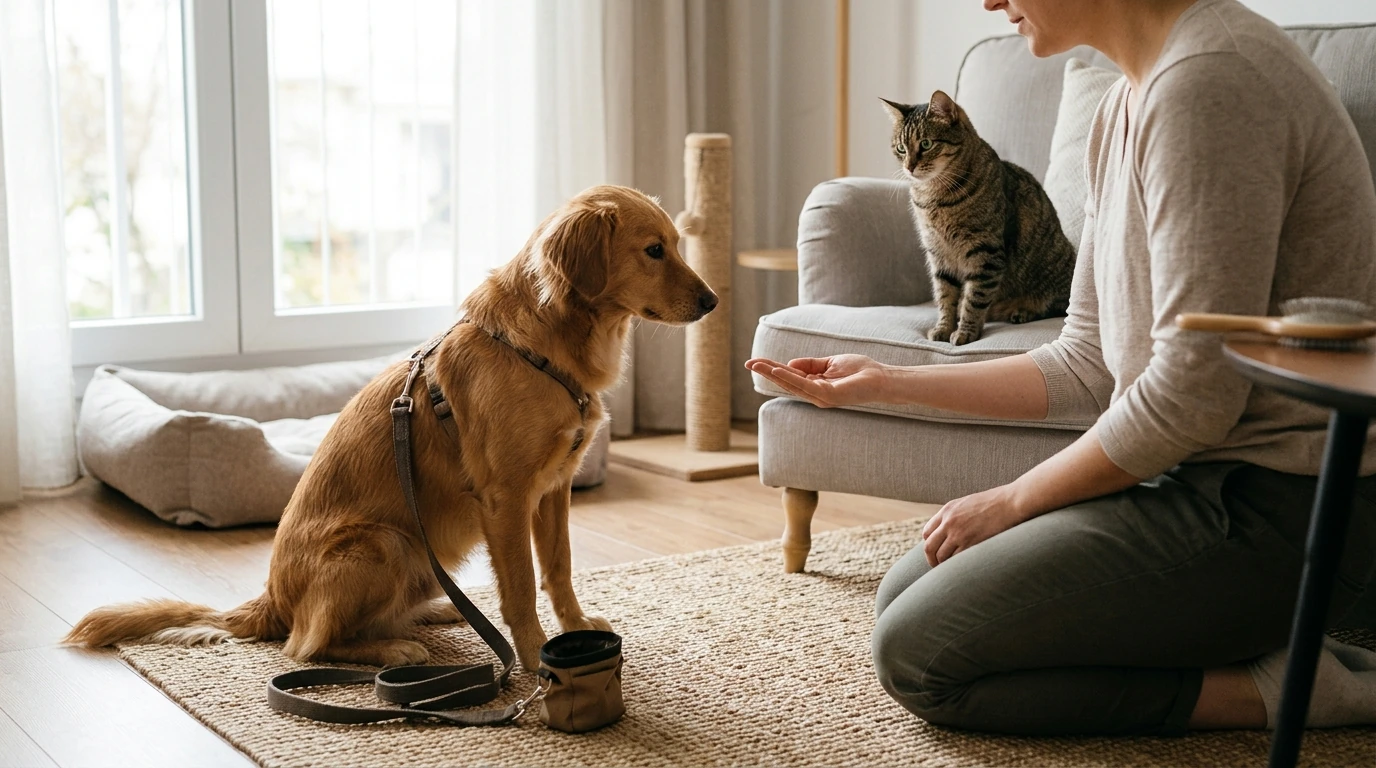
Understanding Your Pet’s Temperament: Decoding Dog and Cat Behavior for Better Care and Training
Temperament shapes how pets respond to people, animals, novelty, and everyday handling. Learning to read behavior signals and identify patterns helps prevent misunderstandings, choose humane training approaches, and tailor routines that support confidence and calm—especially during stressful moments like visitors, vet trips, grooming, or changes at home.
Temperament vs. behavior: what stays steady and what can change
Temperament is your pet’s underlying emotional “starting point”—the baseline that influences how quickly they feel safe, curious, worried, or overwhelmed. Some pets tend to be cautious, others bold; some are highly social, others more sensitive or reserved.
Behavior is what shows on the surface: barking, hiding, scratching, lunging, swatting, or refusing to move. Behavior can change quickly because it’s shaped by learning history, the current environment, and health.
That’s why labels like “stubborn” or “spiteful” usually miss the true driver. What looks like defiance is often fear, frustration, confusion, an unmet need (rest, space, enrichment), or even pain. Over time, early experiences and daily routines can amplify temperament traits (a sensitive pet becomes more reactive under constant chaos) or soften them (a cautious pet becomes braver with predictable, choice-based exposure).
The core dimensions of temperament in dogs and cats
- Sociability: comfort with strangers, children, and unfamiliar animals. Some pets are tolerant (they “put up with it”), some are affiliative (they seek it out), and some are avoidant (they prefer distance).
- Sensitivity threshold: how quickly a pet reacts to noise, touch, fast movement, confinement, or busy spaces. A low threshold often means faster startle responses and a need for slower, quieter handling.
- Recovery time: how fast a pet returns to baseline after a scare or excitement. Faster recovery often predicts easier training progress and better resilience in changing environments.
- Motivation style: food-driven, play-driven, social-driven, or environment-driven (sniffing, exploring, watching). Matching reinforcement to motivation makes training clearer and calmer.
- Handling tolerance: comfort with paws, ears, mouth, lifting, nail trims, harnesses, or carriers—critical for grooming and veterinary care.
Reading body language: early signs before problems escalate
Most “sudden” behavior problems have earlier whispers. Catching the first small signal lets you lower pressure before the pet feels forced to escalate.
Dogs: common early signals
Look for stress signals like lip-licking, yawning, turning the head away, sniffing the ground, a tucked tail, or a body that curves away from you. Rising arousal can show up as a stiff posture, a closed mouth, weight shifted forward, or a hard stare.
Cats: common early signals
Subtle tension often appears as a twitching tail, rippling skin, flattened ears, or a sudden stop in grooming. Fear may look like crouching low, hiding, wide pupils, and staying “small.” During petting, overstimulation markers include a rapidly flicking tail, skin twitching, or a quick head turn toward your hand.
Why freezing matters
Freezing can be a serious warning sign in both dogs and cats. It often means “I can’t handle this, but I’m not safe enough to leave.” Treat it as a request for space.
Practical rule: notice the first small signal and reduce intensity—more distance, less noise, shorter handling—before asking for anything harder.
Quick behavior decoder
| What you see | Likely emotion | What to do next |
|---|---|---|
| Dog turns head away, licks lips, yawns | Mild stress or uncertainty | Increase distance, slow movements, reward calm observation |
| Dog stiffens, closed mouth, hard stare | High arousal; possible guarding or fear | Stop approach, create space, use management; consult a professional if repeated |
| Cat tail flicks rapidly during petting | Overstimulation or irritation | Pause touch, offer choice; switch to short sessions and observe consent |
| Cat crouches low, ears back, pupils wide | Fear | Reduce noise/traffic, provide hiding spots, avoid forcing contact |
| Either species suddenly avoids jumping or being touched | Possible discomfort or pain | Schedule a veterinary check; adjust handling immediately |
Common temperament profiles and the care they tend to need
Training that fits temperament: matching methods to the pet in front of you
For more on humane training principles, see the American Veterinary Society of Animal Behavior (AVSAB) position statements.
Home environment adjustments that change behavior fast
Dogs
Cats
Cats often improve with vertical territory (cat trees, shelves), multiple litter boxes, multiple scratch options, and hiding zones. Play that mimics hunting (stalk → chase → pounce → eat) can reduce nighttime zoomies and tension. The ASPCA cat behavior resources offer practical, cat-specific examples.
Multi-pet conflict reduction
When behavior changes signal a health or welfare problem
A practical temperament check-in routine (5 minutes a day)
Guide for deeper behavior decoding and training support
- Understanding Your Pet’s Temperament: A Complete Guide to Decoding Dog and Cat Behavior for Better Care and Training
- Learn to Learn: A Meta-Learning Guide | Digital Learning Guide PDF, Study Strategies eBook, Learning Style Planner, Educational Self-Development Toolkit
FAQ
Can temperament change as a dog or cat gets older?
Core tendencies often stay fairly consistent, but behavior can shift a lot with learning, environment, and health. Aging-related pain, sensory changes, and routine disruptions can make a normally easygoing pet seem irritable or anxious, while better enrichment and predictable handling can help many pets feel calmer over time.
How can fear be distinguished from stubbornness during training?
Fear shows up as avoidance, freezing, slow “latency” to respond, and stress body language (tight posture, turning away, tucked tail, crouching, wide pupils). Lower the difficulty, add distance from the trigger, use higher-value rewards, and avoid pressure so the pet can choose to engage.
What are the most common signs of stress in cats and dogs?
Dogs commonly show lip-licking, yawning, turning away, sniffing, tucked tail, and stiffness as arousal rises; cats often show tail flicking, skin rippling, flattened ears, crouching, hiding, and sudden “enough” signals during touch. Respond early with space, predictability, and choice, and seek professional help if stress escalates into repeated snapping, biting, or severe avoidance.











Leave a comment