Pet Travel Essentials Checklist: Safe Trips for Dogs & Cats
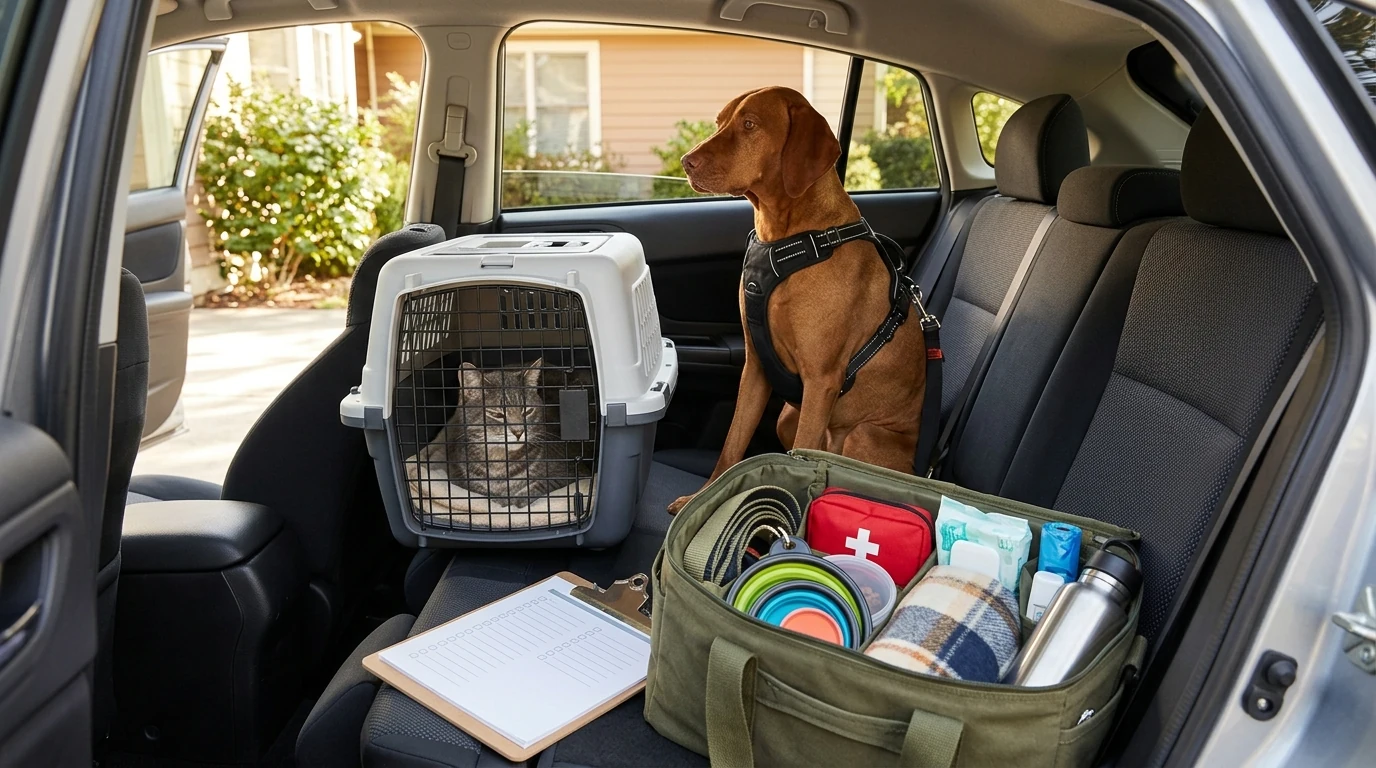
Pet Travel Essentials Checklist for Safe Trips (Dogs & Cats)
Safe pet travel comes down to three things: preparation, comfort, and quick access to the right items when something changes. This planner-style checklist organizes what to pack, what to prep before departure, and what to keep within reach—whether the trip is a short road outing or a longer vacation.
Before You Pack: Health, Paperwork, and Safety Basics
Start with the non-negotiables: health, identification, and secure travel setup. These steps are the difference between a smooth trip and a stressful scramble.
- Schedule a vet check if travel is long-distance, includes flying, or your pet has chronic conditions. Ask about motion sickness and confirm any medication timing changes caused by time zones.
- Confirm ID: secure collar tag plus updated microchip info (name, phone, emergency contact). Add a temporary travel tag with your destination address/phone.
- Bring key documents: vaccination records, rabies certificate, a recent photo of your pet, adoption/ownership info if crossing borders, and any insurance details.
- Plan for restraint: use a crash-tested harness or secured crate for car travel; never allow roaming inside the vehicle.
- Map pet-friendly stops and backup options: rest areas, relief breaks, and nearby emergency vets along your route and near your destination.
For official guidance on traveling with pets, review resources from the American Veterinary Medical Association (AVMA) and (for interstate/international rules) the CDC.
Packing List at a Glance (Keep One Copy in the Car and One in Your Bag)
Packing goes faster when you sort by “what you’d need first if plans change.” Prioritize: (1) safety/ID, (2) food/water, (3) hygiene/cleanup, (4) comfort, (5) activities and extras.
- Keep a “grab kit” accessible: leash, waste bags, wipes, collapsible bowl, and any meds should be reachable without unpacking.
- Label items for quick use in unfamiliar places: “food,” “meds,” “cleanup,” “first aid,” and “overnight.”
Printable Pet Travel Essentials Checklist
| Category | Must-Pack | Optional | Notes |
|---|---|---|---|
| ID & docs | Collar tag, microchip info, vaccination/rabies proof, recent photo | Pet insurance info, border paperwork | Store digital copies on phone + printed copies |
| Travel safety | Crate or seat-belt harness, leash, carrier label | Car window shades | Secure pet before opening doors |
| Food & water | Food for trip + 2 extra days, bottled water, bowls | Treats, slow feeder | Keep food in airtight container |
| Medications | Daily meds, preventatives, pill organizer | Calming aids approved by vet | Pack in original bottles if possible |
| Clean-up | Waste bags, paper towels, pet-safe wipes | Enzyme spray, portable litter box | Carry-out trash bags for odor control |
| Comfort | Bed/blanket, familiar toy, towel | Crate cover, pheromone spray | Familiar scent reduces stress |
| Emergency | Pet first-aid basics, emergency vet list | Tick remover, styptic powder | Know the nearest 24/7 clinic |
If you want a ready-to-print version you can reuse for every trip, see the Printable Pet Travel Essentials Checklist and Planner.
Road Trip Setup: Car Safety and Stress Reduction
A calm ride is mostly about secure positioning, predictable routines, and temperature control.
- Position the crate or restrained seat area away from airbags and with good airflow; never place a pet on the driver’s lap.
- Practice short “training rides” before the big day: load into harness/crate, start the engine, take a short loop, then reward calm behavior.
- Plan break timing: most dogs benefit from stops every 2–3 hours for water and a quick stretch; cats often do better with fewer disruptions.
- Temperature control matters: pre-cool/pre-warm the car, and avoid leaving pets in parked vehicles even for short errands.
- Watch for motion sickness signs (drooling, yawning, lip licking, vomiting). If it has happened before, ask your vet about safe options.
Food, Water, and Bathroom Planning (Dogs vs. Cats)
Travel is easier on your pet’s stomach when you keep the routine familiar and changes minimal.
If you’re traveling across state lines or internationally, check current entry requirements and documentation rules through USDA APHIS Pet Travel Guidance.
Where to Store Essentials for Quick Access
Printable Planner Option for Checklists, Route Notes, and Packing
For a streamlined packing-and-route workflow, pair the pet list with a general planning resource like More Time, Less Stress: Time Management Mini-Course so errands (refills, vet visit, ID update) don’t pile up the day before departure.
If someone in your household is coordinating responsibilities—feeding schedule, medication times, and who carries what—keeping notes in one place can reduce handoff mistakes. A lightweight option is Learn to Learn: A Meta-Learning Guide for building simple routines and check-ins that stick during busy weeks.
FAQ
What are the absolute must-haves for traveling with a dog or cat?
Bring updated ID (tag + microchip info), a secure restraint or carrier, food and water with bowls, any medications, cleanup supplies, and one comfort item that smells like home. Keep a small grab kit within reach so you’re not digging through luggage during stops.
How often should pets take breaks on a road trip?
Many dogs do best with breaks about every 2–3 hours for water and a quick stretch, adjusting for age and weather. Cats often stay calmer with fewer disruptions, so prioritize a stable carrier setup and offer water at longer intervals as tolerated.
Should pets be sedated for travel?
Only use sedation under veterinary guidance, since some medications can affect breathing, balance, or temperature regulation. When possible, start with training rides, routine-friendly packing, and vet-approved calming strategies; prescription options may be appropriate for specific cases.












Leave a comment